
Test the Whole Electric Fence Before Buying a Bigger Charger
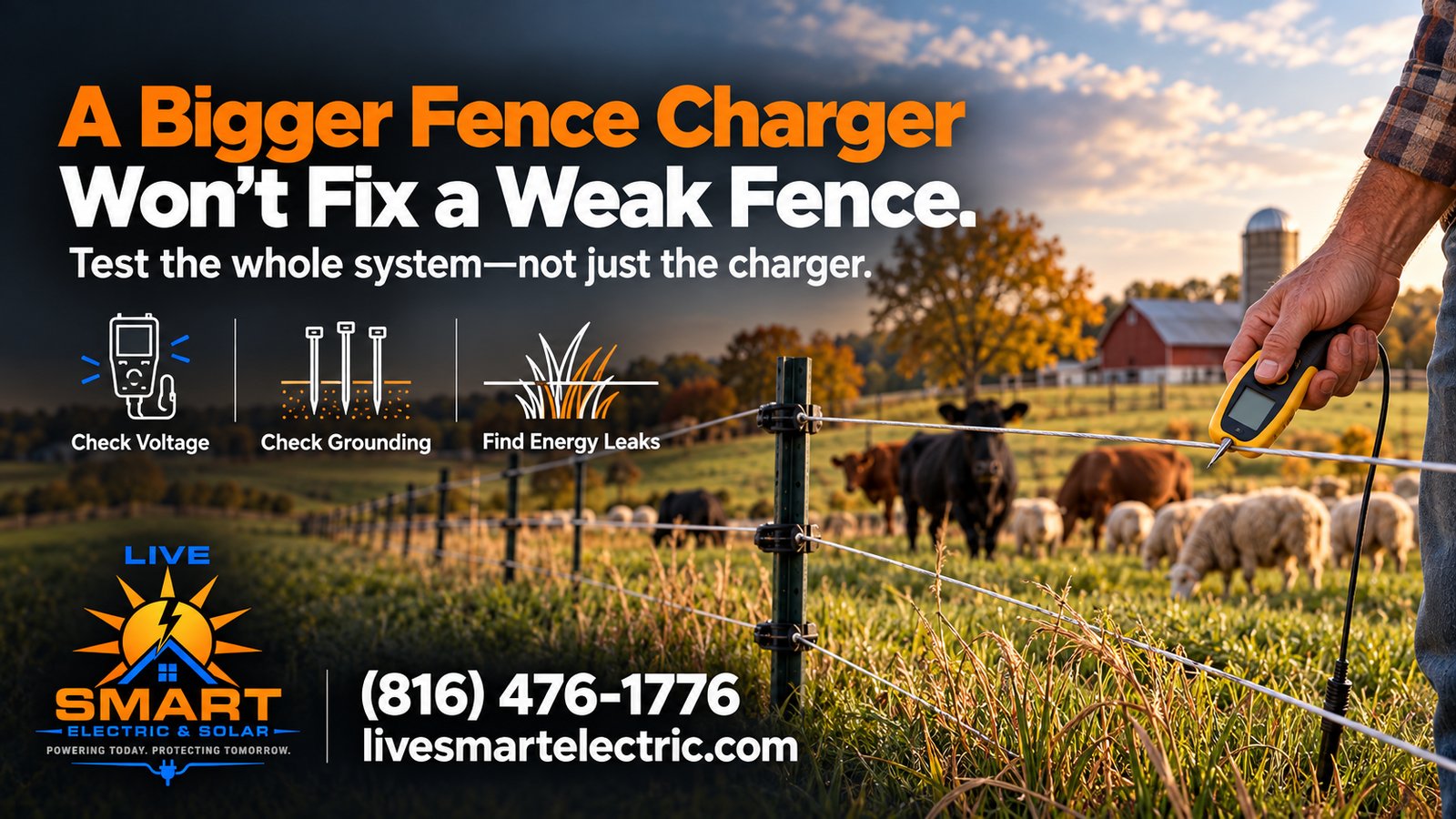
A bigger fence charger won't fix a weak fence. The bottom line is that the energizer's rating matters less than the voltage reaching the far end of the fence. Before buying a larger charger, we want to know how the whole system is performing. A blinking light and a clicking energizer don't answer the practical question: is the fence still doing its job at the back pasture?
Fall is a good time to look for weak connections, vegetation problems and weather-damaged components. Finding those problems before frozen ground and winter storms complicate repairs gives you a chance to address what's actually pulling the fence voltage down.
Measure voltage where the fence needs to work
We start with a proper electric fence voltmeter and check several points along the fence, rather than measuring only beside the energizer. A reading at the charger is part of the picture, but it doesn't tell us what reaches the furthest pasture.
Virginia Tech recommends routinely maintaining approximately 3,000 to 5,000 volts for cattle and around 7,000 volts for sheep. Those recommendations give the voltage checks a useful reference. The important step is to measure along the system instead of treating the energizer's rating as proof that the fence is performing. We need readings from the fence itself before deciding that the charger needs to be larger.
Check the grounding system
Grounding is half the circuit. Dry soil, insufficient ground rods, corrosion and loose connections can weaken an otherwise capable energizer. That makes grounding part of the troubleshooting process, even when the charger appears to be operating.
The fence grounding system should remain separate from the building's electrical service grounding and follow the manufacturer's instructions. We don't want to skip this part of the system while concentrating on the energizer. If the grounding is weak, buying a larger charger leaves that problem unaddressed.
Find energy leaks before adding energy
Next, look for places where the fence is losing energy. Wet vegetation, cracked insulators, damaged underground leads, loose splices and wire touching metal posts can all pull voltage down.
These checks belong ahead of a charger purchase. The question isn't simply how much energy the energizer can supply; it's where that energy is being lost along the fence. A larger rating doesn't identify a damaged underground lead or a loose splice. Inspecting the fence and measuring its voltage gives us a better basis for deciding what needs attention.
Use sections to narrow the search
Large fence systems are easier to troubleshoot when they can be divided into sections. Cutoff switches let an operator isolate a pasture or a fence run and determine where voltage disappears.
That gives the search a direction instead of leaving someone to walk every foot blindly. Combined with voltage checks at several points, section isolation helps narrow the problem to the part of the system that needs attention. The goal is to find the weak section before changing the energizer.
Consider surge protection on both sides
The energizer can face damage from utility-side surges and from lightning entering through the fence. Both sides deserve attention; looking only at the incoming power leaves the fence-side risk out of the discussion.
Properly selected surge protection and manufacturer-approved fence-side lightning diversion systems reduce the risk. They do not eliminate it. We offer whole-home surge protection, but fence-side lightning diversion is a separate part of protecting an energizer. The manufacturer's approved approach matters here, rather than treating protection on one side as an answer for both.
Record a baseline while the fence is working
Once the system is working correctly, record the voltage at the energizer, at the midpoint and at the furthest point in the fence. Keep those readings as the baseline for future checks.
Those baseline readings make future troubleshooting much faster. Instead of relying on the charger's light or clicking sound, you have measurements from a working system to compare against. That keeps the focus on fence performance, including the far end, rather than on the charger alone.
If your energizer, well pump, livestock waterer or barn equipment is critical to your operation, start with our free Home Resilience Assessment. It's a starting point for thinking through power readiness, surge protection and backup needs.
Powering Today. Protecting Tomorrow.
Find Your Home's Weak Points
Take the free 3-minute Home Resilience Assessment and get a score from 0–100 with practical next steps.