
Winter Livestock Water: Planning for Heater and Power Failures
Reliable winter livestock water takes a dependable waterer, a dependable supply, and a backup you can actually use. Around Kansas City, fall is a good time to walk through that whole system, from the water source to the animal drinking it.
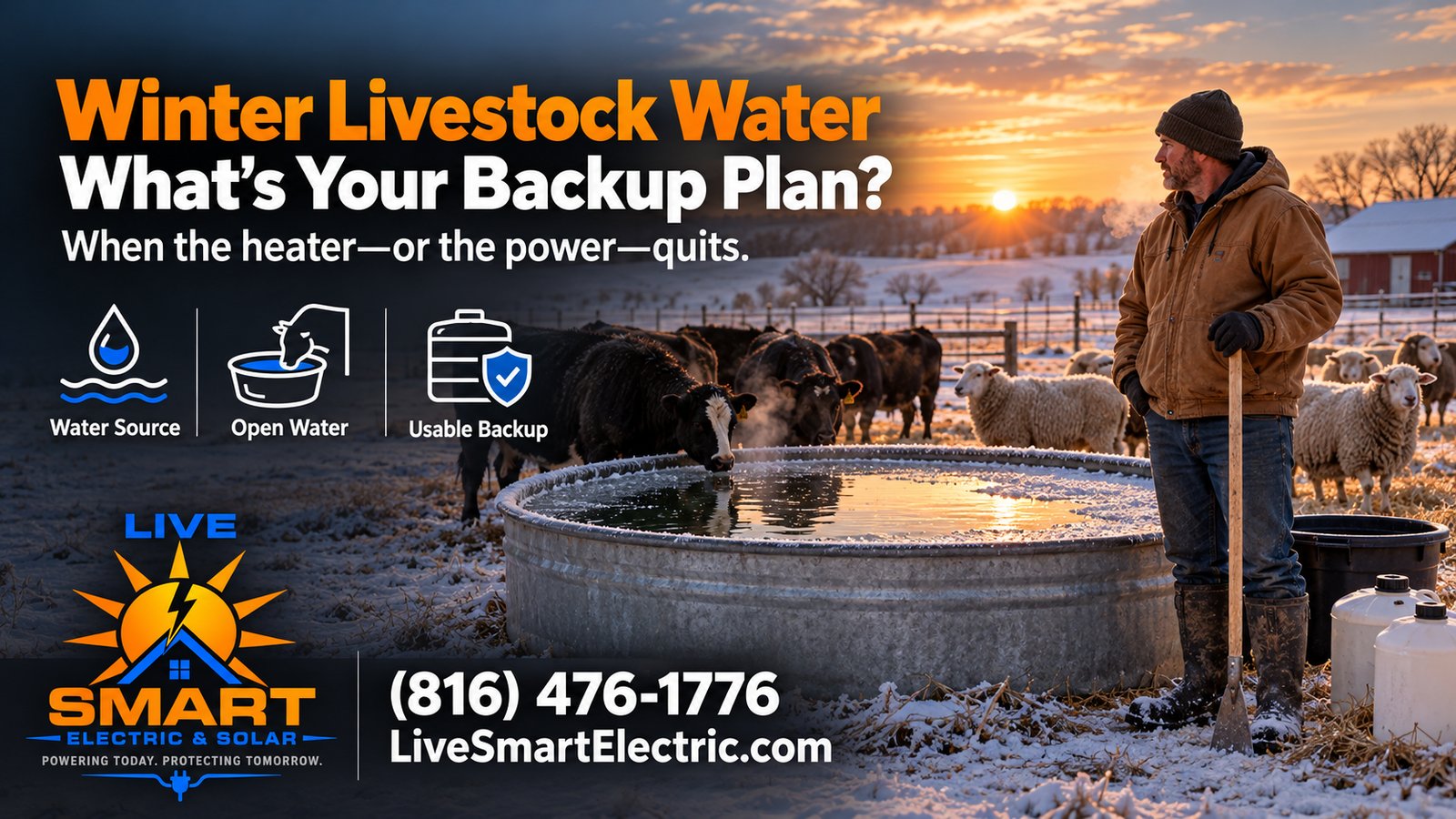
We start with three questions: Where does the water come from? What keeps it accessible? What happens when either one fails? An electric heater won't help an empty tank. A non-electric waterer won't keep an electric well pump running. A second waterer on the same failed supply line may offer very little backup.
Electric heaters need more than working power
Heated automatic waterers and properly selected tank de-icers can reduce daily ice chores. Their weak points include power loss, failed heating components, damaged electrical equipment, and frozen plumbing outside the protected area.
Before winter, follow the manufacturer's inspection and maintenance instructions. Match the de-icer to the tank's material, capacity, and intended use. An exposed element resting against a plastic tank can cause damage; use the equipment and protective cage specified for that application.
Have damaged equipment or repeatedly tripping protective devices evaluated. Don't bypass protection to keep a heater running. Electrical repairs and troubleshooting belong in the plan when the electrical equipment isn't working properly.
Check the supply line as well as the drinking bowl. Heating one doesn't automatically protect the other. Equipment-specific requirements for seals, water line placement, and supplemental heat aren't universal installation instructions.
An approved replacement heater, another usable watering location, or backup electricity may help. But a generator alone won't fix a failed heater.
Non-electric waterers still need checks
Earth-heated waterers use a buried chamber to bring ground heat around the tub. Manufacturer requirements for chamber length and drainage matter. Reducing dependence on electric heat doesn't mean the drinking surface can never ice over.
Routine checks still need to confirm that animals can reach open water and that the tub refills. For the earth-heated system discussed here, protection of the valve and plumbing during low or zero animal use depends on the tub remaining filled. Keep the manufacturer-recommended ice tool available, and have installation or drainage problems evaluated if performance falls short.
Insulated ball- or flap-style waterers have their own requirements. Some rely partly on incoming water to replace heat lost in cold weather. Suitability depends on the model, installation, climate, and animal use. A large cattle herd and a handful of sheep don't create the same water turnover.
Before buying, ask the manufacturer if the model can operate without heat for your species, animal count, and winter conditions. Confirm that smaller or younger animals can operate the opening. If conditions don't qualify, plan for approved supplemental heat or another arrangement.
Flow-through water needs a dependable supply
A properly designed flow-through system can use continuous water movement to help prevent freezing. University of Missouri Extension has described a concrete stock tank using a continuous trickle and overflow without external power for freeze prevention.
The water must keep flowing, and the overflow needs somewhere appropriate to go. That calls for adequate supply and planned drainage. Simply leaving a hose running can waste water, create dangerous ice, and still fail if the supply freezes or stops. A powered pump remains dependent on electricity even if the tank has no heater.
Make manual watering a usable backup
For a manageable number of animals, breaking ice and delivering fresh water can bridge an equipment failure. We treat it as a workable backup only when tools, water, and labor are ready beforehand.
Open enough drinking area for the animals using the tank, and remove loose ice where practical. Check often enough that refreezing doesn't cut off access; severe conditions may require more than morning and evening visits.
Use tools appropriate for the tank. Avoid striking heaters, floats, valves, or the tank itself, and follow electrical equipment instructions before working around an installed heater. Refill as needed and confirm that animals actually drank.
Breaking the surface won't fix a frozen-solid tank or a failed supply. Spare tubs and hauled water become important then.
Match the backup to the failure
Surface ice calls for opening access. A failed heater with flowing water calls for approved replacement equipment or another tank. A frozen or broken supply line calls for an alternate source and temporary tanks while repairs are made.
If an outage stops the well, options include properly installed backup power, stored water, or an arranged hauling source. For generator installation, the plan needs to account for well pump starting requirements and the heaters operating with it. Building connections need proper transfer equipment installed by a qualified electrician.
Work out daily water needs with your veterinarian or extension advisor. Check storage, vehicle capacity, access routes, and protection against freezing. Designate a backup caretaker with instructions and supplies if the normal caretaker can't reach the farm.
Write down where tomorrow's livestock water would come from if the main system stopped tonight. If backup electricity is part of your answer, you can book an estimate with Live Smart Electric & Solar.
Powering Today. Protecting Tomorrow.
Find Your Home's Weak Points
Take the free 3-minute Home Resilience Assessment and get a score from 0–100 with practical next steps.